History of the Wisconsin State Capitol Police Department
The Wisconsin State Capitol Police Department is one of the oldest police departments in the State of Wisconsin. The first of three Capitol buildings erected in Madison was constructed in 1837, when Wisconsin was still a territory that covered modern-day Wisconsin, Minnesota, Iowa, and parts of North Dakota and South Dakota. There were likely Capitol Police or at least a night watchman back then. In 1857, construction began on the second Capitol building in Madison. The earliest mention found of Capitol Police is in a 1897 Wisconsin State Statute, showing Capitol Police were paid $62 per month:
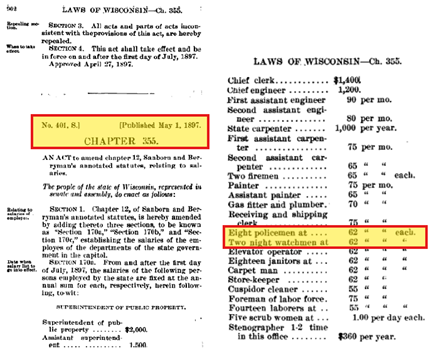
In 1904, the second Capitol building burned, and our current Capitol was constructed from 1906 to 1917.
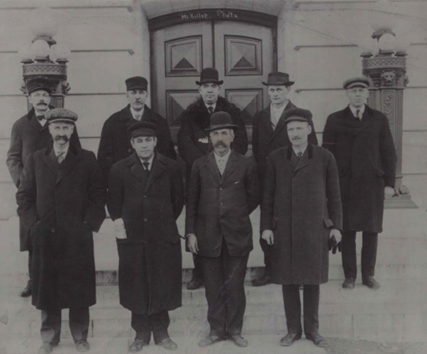
Capitol Police, early 1900s |
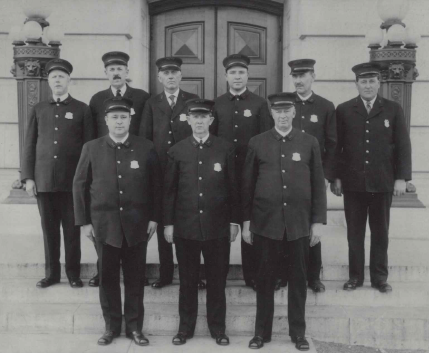
Capitol Police, 1913 |
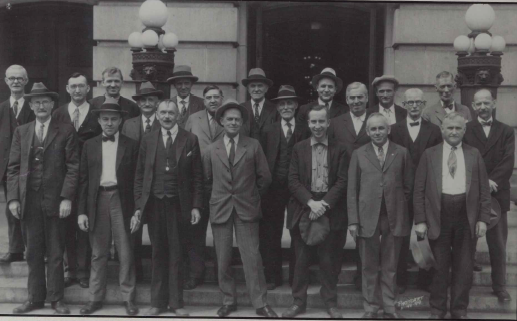
Capitol "Security People", 1930 |
For decades, Capitol Police were focused on the Capitol building and on the surrounding grounds. But as the state grew, so did the need for additional state office buildings, and with that came a need for police and security services within those facilities.
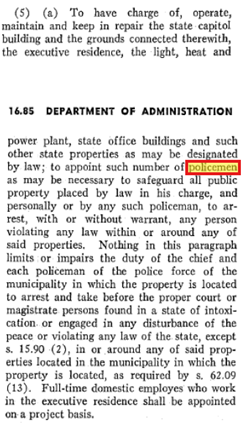
In 1965, our statutory authority could be found in State Statute 16.85(5)(a) and listed us as "policemen". Our authority to arrest was limited to crimes that occurred "within or around" state facilities.
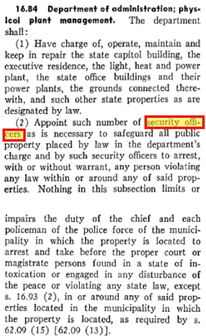
In 1967, our authority was changed to State Statute 16.84(2), and the wording was changed to call us "Security Officers" with arrest powers.
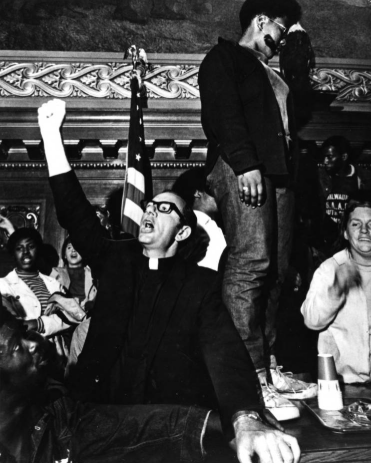
On September 29, 1969, Father James Groppi and over 1,000 followers took over the Assembly chambers for 11 hours after marching up from Milwaukee to protest welfare reform laws. This was an immediate catalyst to grow the Capitol Police Department from an eight-man agency to a twenty-man agency.
On August 24, 1970, the Sterling Hall Bombing occurred on the UW Madison campus, killing one and injuring three others. This was in protest to research that was being conducted at the facility for the United States Army in alignment with Vietnam War efforts. It was the largest act of domestic terrorism in U.S. History at the time. This event led to the Capitol Police Department growing to sixty-six police officers, including three Sergeants, and our first Chief, Robert Hamele. Prior to Chief Hamele, Capitol Police reported to the Capitol Superintendent.
Robert Hamele - First Chief of Police (1970-1986)
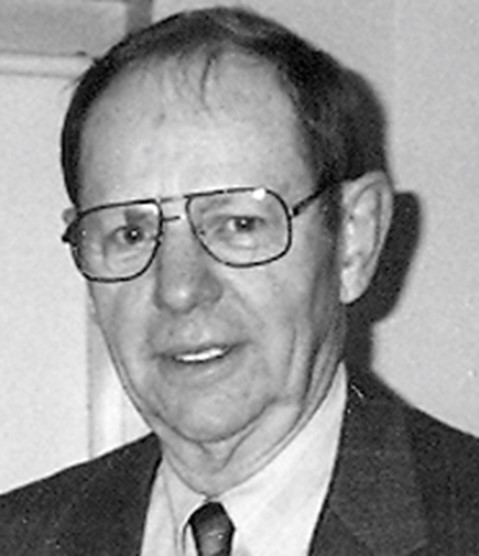
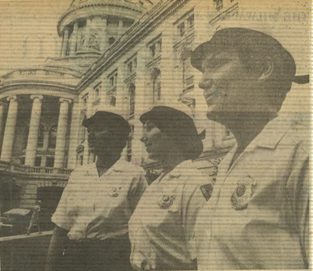
Under Chief Hamele, the Wisconsin State Capitol Police developed into a modern professional police agency and hired our first female police officers.
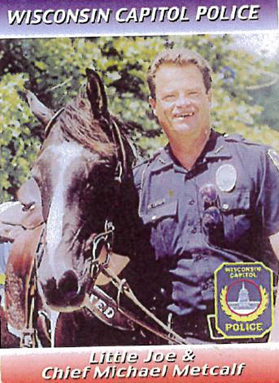
Michael Metcalf - Second Chief of Police (1986-2003)
In 1996, Wisconsin Act 174 was passed, which provides the Wisconsin State Capitol Police with their current statewide authority that is found listed under Wisconsin State Statute 16.84(2):
Appoint such number of police officers as is necessary to safeguard all public property placed by law in the department's charge, and provide, by agreement with any other state agency, police and security services at buildings and facilities owned, controlled, or occupied by the other state agency. The department may charge the other state agency for the cost of providing security at multitenant buildings or multitenant state facilities. The governor or the department may, to the extent it is necessary, authorize police officers employed by the department to safeguard state officers, state employees, or other persons. A police officer who is employed by the department and who is performing duties that are within the scope of his or her employment as a police officer has the powers of a peace officer under s. 59.28, except that the officer has the arrest powers of a law enforcement officer under s. 968.07 regardless of whether the violation is punishable by forfeiture or criminal penalty. The officer may exercise the powers of a peace officer and the arrest powers of a law enforcement officer while located anywhere within the state. Nothing in this subsection limits or impairs the duty of the chief and each police officer of the police force of the municipality in which the property is located to arrest and take before the proper court or magistrate persons found in a state of intoxication or engaged in any disturbance of the peace or violating any state law in the municipality in which the property is located, as required by s. 62.09(13).
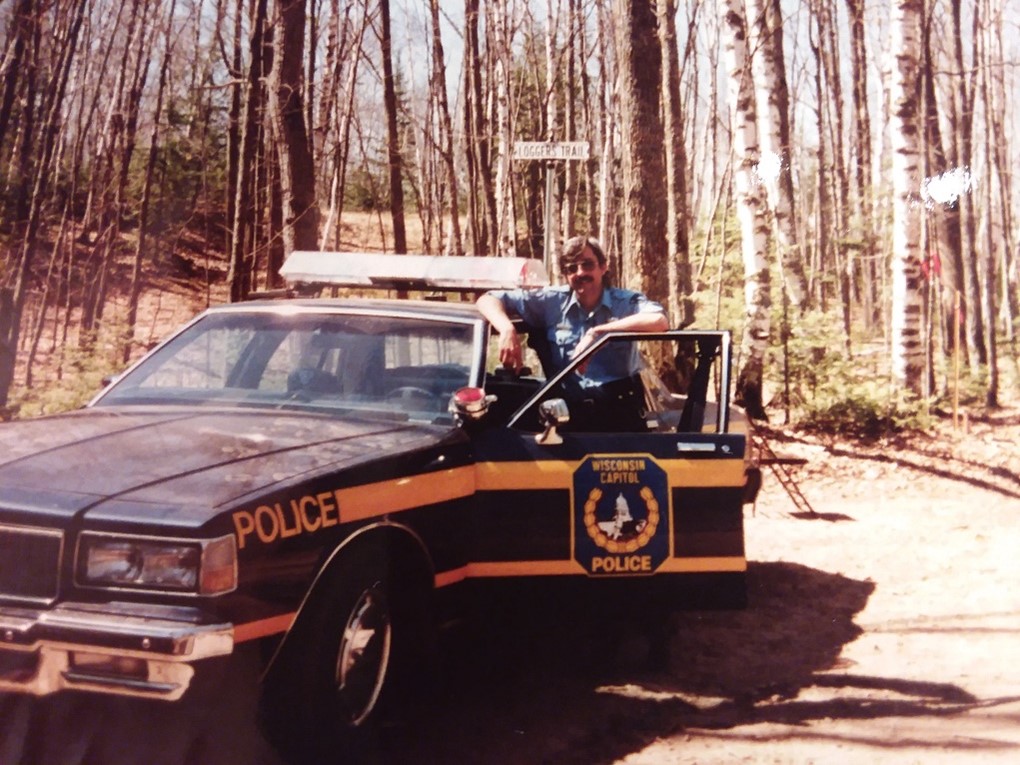
Squad car from the Chief Metcalf era.
David Heinle - Third Chief of Police (2004-2007)
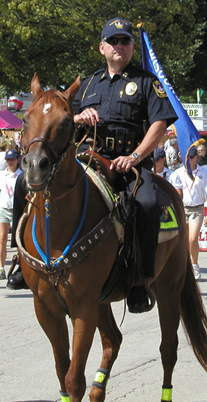
In 2004, there was consideration of merging the Capitol Police with the Wisconsin State Patrol as a cost-saving measure for the state and to prevent overlap. Chief Heinle was brought in from the Wisconsin State Patrol as the Interim Chief of Capitol Police to facilitate the merger and study the feasibility of it. Ultimately, the merger did not occur and Chief Heinle was hired as the permanent Chief of Capitol Police.
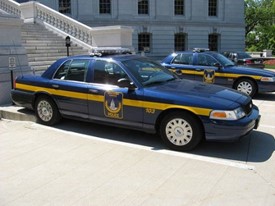
Squad car from the Chief Heinle era.
Charles Tubbs - Fourth Chief of Police (2008-2012)
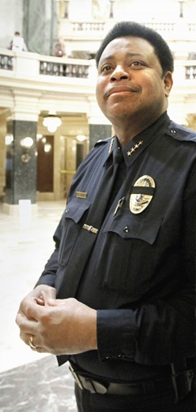
Chief Tubbs oversaw the largest and most sustained protest and occupation of the State Capitol building and grounds in 2011 when citizens showed up to protest the Budget Repair Bill, which later became known as the Act 10 Demonstrations.
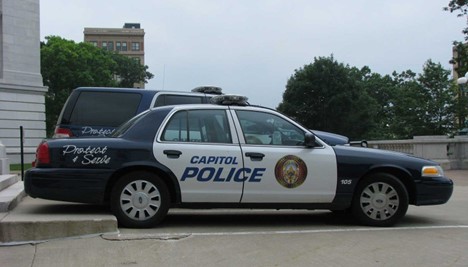
Squad car from the Chief Tubbs era.
Acting Chiefs
It deserves note that two former members of the Executive Management Team also served in the capacity of Acting Chief. Lieutenant Marc Schmidt 2003-2004 and Deputy Chief Daniel Blackdeer 2007-2008.